
Open shelving vs upper cabinets is a decision that affects far more than kitchen appearance. The choice influences storage capacity, organization, cleaning requirements, resale flexibility, and how the kitchen functions on a daily basis. While open shelving has become popular in many contemporary renovations, its practicality varies significantly depending on household size, cooking habits, and long-term plans. At Forest to Finish, the decision is typically evaluated through functionality first and aesthetics second, particularly for homeowners planning to live with the space for many years.
The Storage Tradeoff
The most significant difference between open shelving and upper cabinets is usable storage. While both occupy wall space, they perform very differently when storing everyday kitchen items.
Open shelving prioritizes visibility and accessibility. Upper cabinets prioritize storage volume, concealment, and flexibility.
Capacity Differences in Real Kitchens
Open shelves generally provide less practical storage than upper cabinets occupying the same wall area. While shelf dimensions may appear similar, cabinets use space more efficiently because they provide enclosed storage with multiple shelves, greater depth utilization, and the ability to stack and organize items without regard for visibility.
There is also an important difference between theoretical shelf space and usable storage capacity. Although shelves may technically hold a significant number of items, homeowners often limit what is stored there because everything remains visible. Cabinets allow storage of both attractive and purely functional items without affecting the room’s appearance.
In real kitchens, homeowners often discover that items suitable for display represent only a portion of what needs to be stored. Everyday necessities such as food containers, small appliances, plastic ware, cleaning supplies, specialty cookware, and irregularly shaped items are often better suited to enclosed storage.
The reduction in usable storage varies by shelf depth, layout, and household needs, but shelves generally accommodate fewer total items than enclosed cabinetry occupying the same wall space. This difference becomes more noticeable as household size increases. Families, frequent cooks, and homeowners who prefer keeping a wider variety of kitchen items on hand generally benefit more from upper cabinet storage than from extensive open shelving.
Visual Openness vs Practical Storage
The primary advantage of open shelving is visual rather than functional. Removing upper cabinets increases visible wall area and extends sightlines throughout the room, often making smaller kitchens feel larger and less enclosed.
This effect can be particularly appealing in compact kitchens where upper cabinetry may feel dominant. In larger kitchens, the visual impact is usually less dramatic because the room already benefits from greater openness.
However, visual openness should be weighed against the practical reality that the stored items remain visible at all times. Successful open shelving depends on maintaining a relatively organized and curated appearance. Kitchens that support a large volume of everyday storage often find upper cabinets easier to manage over the long term.
Maintenance and Daily Living Impact
Open shelving generally requires more ongoing maintenance than upper cabinets. Because items remain exposed, dust, airborne cooking residue, grease particles, and household debris can gradually accumulate on both shelves and their contents.
The amount of additional cleaning varies depending on cooking frequency, ventilation performance, and shelf location. Unlike items stored inside cabinets, exposed dishes, glassware, and decorative objects often require periodic wiping or washing even when they are not actively being used.
Certain items perform better on shelves than others. Frequently used dishes, bowls, and glassware often remain relatively clean because they are regularly handled, rotated, and washed. Infrequently used items typically accumulate dust more quickly and require additional maintenance.
Organization also becomes part of daily upkeep. Open shelves function as visible design elements, meaning clutter is immediately noticeable. Upper cabinets allow homeowners to store a wider range of items without affecting the visual appearance of the room.
For households seeking minimal maintenance, enclosed cabinetry typically provides the more forgiving solution. For homeowners comfortable maintaining organized display areas, the additional upkeep may be an acceptable tradeoff.
Climate and Lifestyle Factors in Edmonton
Many Edmonton homes feature open-concept layouts where kitchens remain visible from adjacent living and dining spaces. As a result, storage choices often affect the appearance of a much larger portion of the home rather than a single room.
This visibility makes shelving decisions more consequential because the organization and appearance of stored items become part of the overall living environment. What works visually within the kitchen must also work within the broader main-floor design.
Lifestyle is often a stronger factor than climate alone. Households that cook frequently, entertain regularly, or require substantial food and cookware storage generally place greater demands on upper storage capacity.
Edmonton’s climate itself typically has limited influence on shelving performance compared to cooking habits and daily household activity. Seasonal living patterns can have a greater effect. During winter months, when households often spend more time indoors and cook at home more frequently, storage demands may increase. Kitchens that already operate near their storage limits may feel the loss of upper cabinets more significantly.
For many Edmonton households, practicality depends less on design preference and more on whether storage needs align with the amount of visible shelving being proposed.
When Open Shelving Makes Sense
Open shelving is most successful when used intentionally rather than as a direct replacement for every upper cabinet. Certain applications benefit from its visual advantages while minimizing functional compromises.
Feature Wall Applications
Open shelving can work well as a focal feature on a specific wall or within a designated section of the kitchen. Displaying dishes, glassware, decorative items, cookbooks, or frequently used pieces can add character without sacrificing large amounts of enclosed storage.
In many kitchens, a relatively small section of shelving provides most of the visual benefit homeowners are seeking. Because the shelving occupies a limited area, homeowners gain the sense of openness while preserving the majority of their functional storage capacity elsewhere.
This approach often provides a more balanced result than eliminating all upper cabinets throughout the kitchen.
Hybrid Layouts (Shelves + Cabinets)
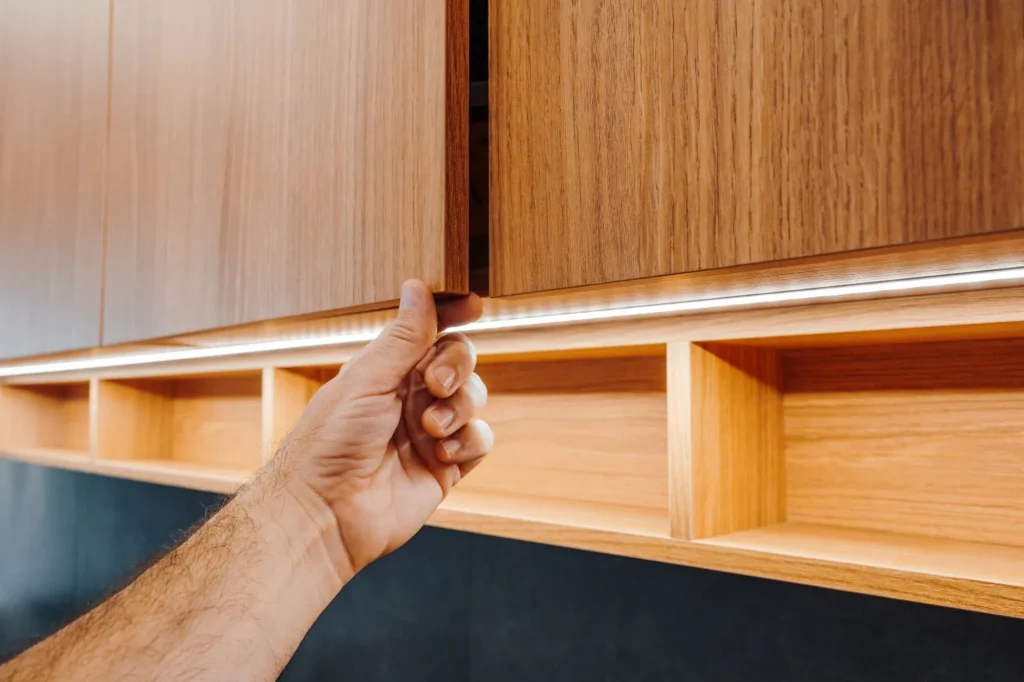
Hybrid layouts combine open shelving with traditional upper cabinets. This approach has become increasingly common in custom kitchens because it allows homeowners to introduce visual openness without sacrificing the storage performance most households require.
Frequently used or display-worthy items can be placed on shelves, while less attractive, seasonal, or bulkier items remain concealed within cabinets. Common shelf locations include areas around windows, beverage stations, coffee bars, decorative focal walls, or sections intended for everyday dish storage.
For many households, hybrid layouts provide the greatest long-term flexibility because shelving can be incorporated without significantly reducing storage performance.
Long-Term Resale and Flexibility Considerations
Open shelving does not automatically create resale concerns. Moderate use of shelving is widely accepted and often viewed as a design feature. However, extensive removal of upper cabinetry may appeal to a narrower range of buyers because storage capacity remains one of the most consistently valued features across different household types and life stages.
This difference becomes more relevant in family-oriented homes where storage demands are typically higher. Buyers who value organization and concealed storage may view extensive open shelving as a limitation rather than a benefit.
A major advantage of retaining upper cabinets is flexibility. Cabinet interiors can be reorganized, updated, or refinished without changing the overall storage configuration. Open shelving provides less adaptability because its function is inherently tied to visible storage.
Homeowners considering open shelving should also evaluate future renovation flexibility. In many cases, upper cabinets can be removed later to create shelving through localized modifications such as wall repairs, refinishing, shelf installation, and trim adjustments. Reversing the process is often more involved because it may require new custom cabinetry, wall repairs, finishing work, and integration with the surrounding kitchen design.
For Edmonton homeowners seeking the most balanced solution, hybrid layouts often provide the strongest combination of storage capacity, visual openness, resale flexibility, and long-term practicality. Forest to Finish helps homeowners evaluate storage configurations that support both current lifestyle needs and future renovation goals.
