
Flat-panel vs shaker cabinets is a comparison many homeowners face when planning a kitchen renovation intended to last for years rather than follow short-term trends. Both styles remain common in Edmonton homes, but they age differently when viewed through long-term design relevance, maintenance visibility, resale expectations, and renovation flexibility. At Forest to Finish, cabinet design decisions are often guided by how a homeowner expects the space to perform over the next 10 to 15 years rather than how it looks immediately after installation.
What “Ages Well” Really Means in Cabinet Design
A cabinet style ages well when it continues to look intentional and relevant despite changing design preferences. This does not necessarily mean the style never falls in or out of fashion. Instead, it means the design can adapt to evolving interiors without making the entire kitchen feel tied to a specific era.
Long-term performance is influenced by several factors, including visual simplicity, compatibility with future finishes, maintenance visibility, and resale appeal. A style that performs well in all four areas is generally more likely to remain attractive throughout multiple design cycles.
Homeowners should also consider the renovation horizon. A kitchen intended to remain unchanged for 15 years may require a different cabinet style strategy than a home likely to undergo another update within five to seven years.
Flat-Panel Cabinets Over Time
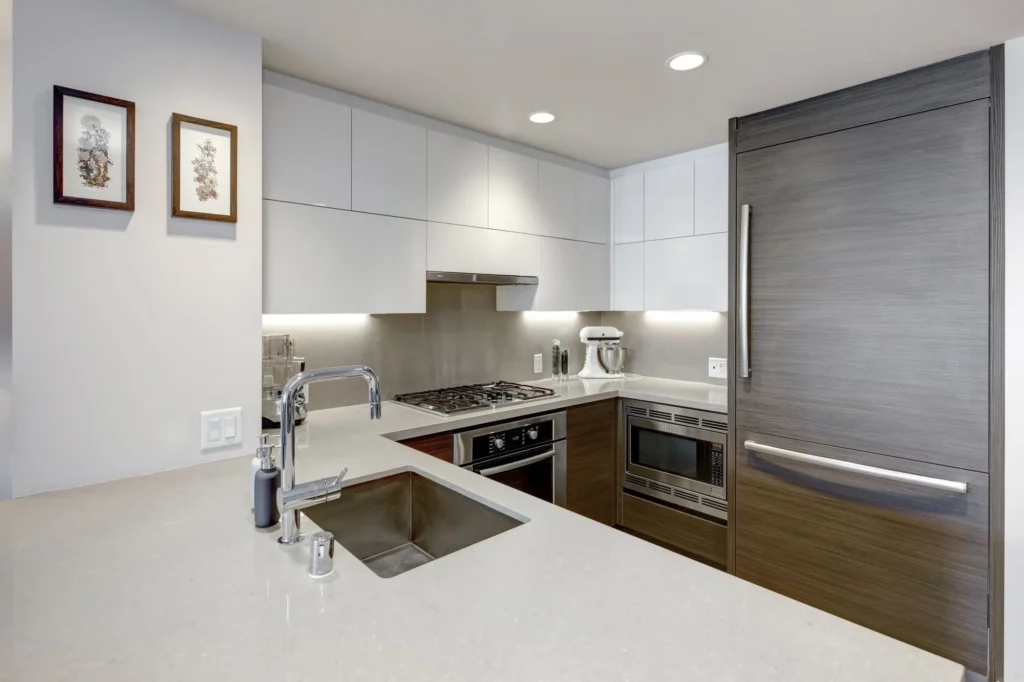
Flat-panel cabinets feature a smooth, uninterrupted surface with minimal visual detailing. Their longevity depends largely on how well minimalist design continues to align with future preferences.
Modern Aesthetic Durability
Flat-panel cabinets are closely associated with contemporary and modern design. Their clean appearance allows them to integrate well with minimalist interiors, modern lighting, and streamlined architectural features.
Because the profile is visually simple, flat-panel doors avoid many decorative elements that become dated quickly. However, their long-term success often depends on the broader design language surrounding them. Extremely trend-driven colour schemes or highly contemporary kitchen layouts may age faster than the cabinet profile itself.
Wear Visibility on Smooth Surfaces
The smooth surface of flat-panel cabinets makes cleaning straightforward because there are no grooves or recessed details where dust and grease can accumulate.
At the same time, scratches, dents, fingerprints, and surface imperfections can become more noticeable because there are fewer visual details to break up the surface. Visibility varies significantly depending on colour, sheen level, and lighting conditions.
Minor damage typically remains cosmetic, but homeowners seeking a highly uniform appearance may notice wear more readily on flat-panel doors than on more detailed profiles.
Risk of Looking Dated in 10–15 Years
Flat-panel cabinets generally age best when incorporated into balanced, restrained designs. The cabinet profile itself has existed for decades and is unlikely to disappear entirely from residential design.
The greater risk comes when flat-panel cabinetry is paired with short-lived trends. Kitchens heavily influenced by a specific design era may feel dated even if the cabinet doors themselves remain visually relevant.
For homeowners planning to stay in a property for 10 to 15 years or longer, flat-panel cabinets tend to perform best when combined with neutral finishes and timeless architectural elements.
Shaker Cabinets Over Time
Shaker cabinets use a framed centre panel that creates more visual detail while remaining relatively simple. Their continued popularity is largely tied to their ability to work across multiple design styles.
Transitional Flexibility
One reason shaker cabinets remain common is their adaptability. They fit comfortably within traditional, transitional, farmhouse, contemporary, and many custom kitchen designs without appearing out of place.
Because the profile sits between highly decorative and highly minimalist styles, shaker cabinets are less dependent on a specific design trend. This flexibility often helps them remain visually relevant through multiple renovation cycles.
For homeowners uncertain about future design preferences, shaker cabinets generally offer greater stylistic versatility.
Cleaning and Groove Maintenance
The recessed panel and surrounding frame create additional edges that can collect dust, grease, and cooking residue over time.
While routine cleaning is still straightforward, shaker cabinets require slightly more attention than flat-panel doors because contaminants can accumulate in corners and profile transitions. The difference is usually minor but becomes more noticeable in heavily used kitchens.
Small surface imperfections may also be less visible because the door profile naturally creates shadows and visual variation.
Style Adaptability With Hardware Changes
Shaker cabinets respond particularly well to hardware updates. Replacing knobs, pulls, or finishes can significantly change the overall appearance without replacing the cabinetry itself.
This allows homeowners to refresh the kitchen as design preferences evolve. Hardware updates that may feel subtle on flat-panel cabinetry often create a more noticeable visual transformation on shaker doors because the profile provides additional design context.
For long-term ownership, this flexibility can extend the perceived lifespan of the overall kitchen design.
Side-by-Side Long-Term Comparison
| Criteria | Flat-Panel | Shaker | Best For |
| Design Longevity | Strong when paired with timeless finishes | Strong across multiple design styles | Tie |
| Trend Resistance | Moderate to high depending on overall design | High | Shaker |
| Cleaning Simplicity | Excellent | Good | Flat-Panel |
| Visibility of Wear | Higher on uniform surfaces | Lower due to profile detail | Shaker |
| Hardware Refresh Potential | Moderate | High | Shaker |
| Contemporary Appearance | Excellent | Good | Flat-Panel |
| Broad Resale Appeal | Good | Excellent | Shaker |
| Design Flexibility | Moderate | Excellent | Shaker |
For most Edmonton homeowners seeking maximum long-term flexibility, shaker cabinets generally provide the safest balance of trend resistance, adaptability, and resale appeal. Flat-panel cabinets remain highly effective for homeowners committed to a contemporary aesthetic and willing to maintain a more minimalist design direction over time.
Choosing Based on Renovation Horizon
Homeowners planning to renovate again within a relatively short timeframe may prioritize current design preferences over maximum long-term adaptability. In these situations, choosing the style that best matches the desired aesthetic often makes sense.
For renovation horizons exceeding 10 years, adaptability becomes increasingly important. Shaker cabinets typically provide more opportunities to update the appearance through hardware, colour changes, and surrounding design updates without replacing the doors themselves.
Flat-panel cabinets can still perform exceptionally well in long-term homes when paired with restrained design choices and durable finishes. They are not inherently trend-driven, but they depend more heavily on the overall design remaining balanced as preferences evolve.
At Forest to Finish, cabinet design recommendations are based on how homeowners intend to use, maintain, and live with their kitchens over time, ensuring the selected style continues to support both functional and aesthetic goals long after the renovation is complete.
